Tree Removal Sarasota Company
Trust expert Sarasota tree care with ISA Certified Arborists operating under ANSI A300 and Z133 guidelines. Our team provides evidence-based tree pruning, comprehensive risk assessments (TRAQ), and storm preparation specifically designed for local wind conditions, salt exposure, and sandy soils. Our team verifies required permits, DBH requirements, coastal setbacks, and HOA regulations, while maintaining full tree-specific insurance coverage including general liability, workers' compensation, and commercial auto. Expect professional defect identification, strategic crown reduction, professional cabling, careful tree removal, and safe stump grinding—thoroughly documented with detailed photos and specialized instruments. Understand how proper scheduling, IPM, and ongoing upkeep decrease potential hazards and long-term costs.
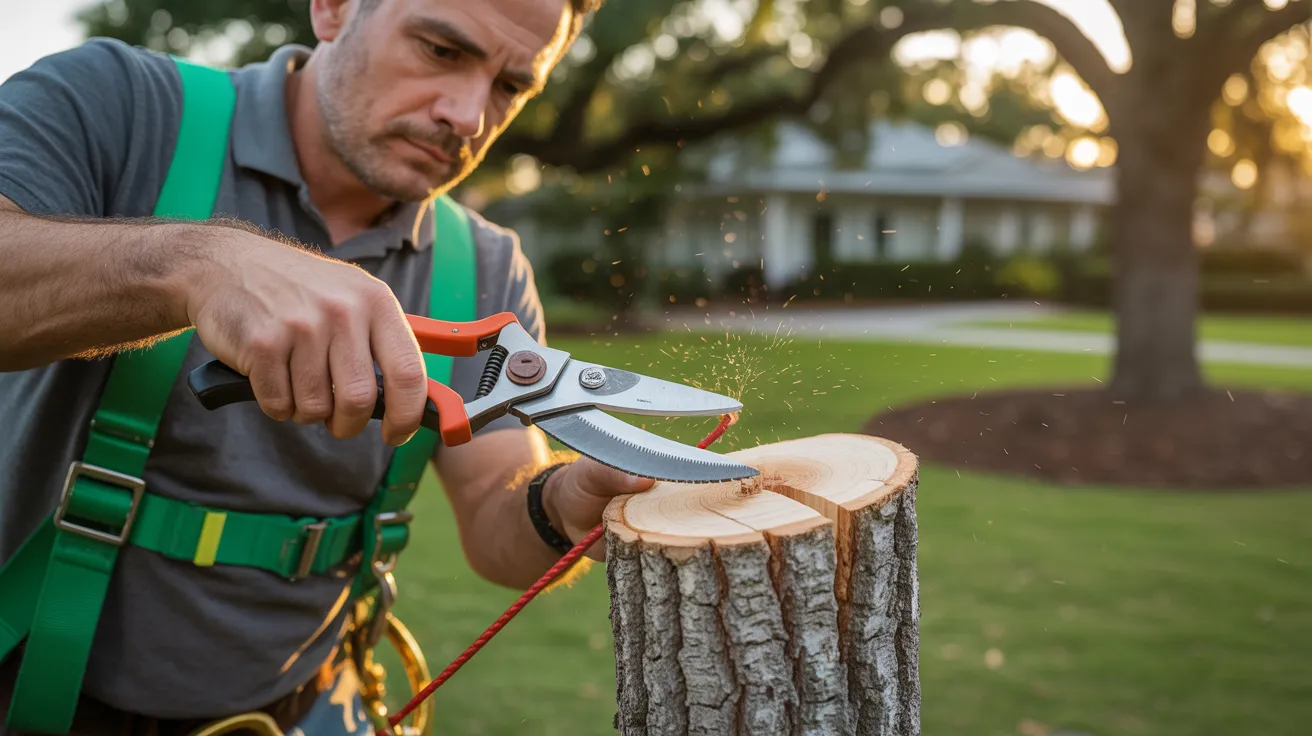
Main Insights
- ISA Certified Arborists offer coastal-ready tree care adhering to ANSI A300 standards, assessing wind exposure, saline soil conditions and structural soundness of Sarasota's trees.
- Complete permit management: handle and confirm ePermits, DBH requirements, coastal setback regulations, HOA approvals, and endangered species evaluations; emergency hazard exemptions supported and certified with arborist assessment reports.
- Comprehensive risk analysis following TRAQ guidelines, including photo documentation, structural testing, and risk matrices to establish necessary tree maintenance actions.
- Professional tree pruning and development management: incorporating crown maintenance, clearance management, and structural improvements to minimize wind resistance, avoid structural problems, and extend the life of your tree's canopy.
- Our fully insured and compliant crews follow comprehensive safety standards, including OSHA guidelines, workplace insurance, specialized tree service liability, underground utility location, and documented maintenance records to reduce liability exposure.
Understanding the Value of Certified Arborists for Sarasota's Coastal Area
Given that Sarasota is located along a storm-vulnerable, saline coastline, certified arborists are essential in preserving tree wellness and decreasing dangers to people and property. You gain from professionals experienced in analyzing structural integrity, salt content, and wind vulnerability using ANSI A300 standards and ISA best practices. They identify species with established coastal hardiness, guide coastal acclimatization, and ensure root zone aeration in dense, coastal substrates. They also assess canopy density for wind protection and identify defects like structural weaknesses, embedded bark, and damaged root foundations.
You'll get evidence-based recommendations based on location-specific measurements: foliage chloride measurements, soil salinity measurements, and plant survival data. Expert consultation prevents improper cuts, soil mismanagement, and unsuitable species that raise vulnerability in tropical storms and king tides.
Essential Tree Care Services for Health and Safety
You safeguard people and property when you schedule regular pruning that enhances tree structure, maintains proper clearance, and decreases wind-related hazards. You further decrease potential liability by utilizing formal hazard assessment protocols-ANSI A300/ISA TRAQ-to identify structural issues, impact zones, and needed corrections. Moreover, you manage pathogens and pests through regular inspection, accurate diagnosis, and research-backed solutions (sanitation, targeted biocides, and IPM) synchronized with Sarasota's seasonal conditions.
Advantages of Routine Pruning
Regular pruning not only improves visual appeal-it reduces structural problems, clears diseased or crossing branches, and optimizes wind-load distribution to reduce potential damage during storms. You'll additionally maintain clearance over roofs, walkways, and utilities, decreasing contact points that create abrasion and decay. Appropriate canopy thinning enhances light and air penetration, decreasing leaf wetness duration and incidence of foliar pathogens. Correct branch spacing and selective cuts support stronger attachment angles, preventing co-dominant stems and future splitting. Timing is important: cut during dormancy or after peak growth flush to lower stress and pest attraction. Implement ANSI A300 standards and clean, sanitized tools to produce small, clean wounds outside the branch collar. With regular intervals, you extend service life, preserve form, and prevent costly emergency interventions.
Safety Evaluation Procedures
Pruning establishes the framework; safety analysis ensures that structure performs securely under actual conditions. You start with a systematic assessment protocol: tree type classification, diameter, canopy structure, flaws (splits, cavities, co-dominant stems), root plate condition, inclination, and target occupancy beneath. You capture through images, trunk measurements, and percussion tests. For high-value sites, you include advanced diagnostic tools to quantify internal decay and determine remaining solid wood.
Subsequently, you utilize a risk matrix that combines failure probability with impact severity, taking into account Sarasota's environmental factors and ground composition. You subsequently specify risk reduction strategies: tree crown reduction specifications, structural reinforcement requirements (ANSI A300), pruning for utility clearance, or removal if residual risk stays intolerable. Finally, you schedule follow-up inspection schedules based on vegetation development and weather cycles.
Disease and Pest Control
How can you preserve Sarasota's trees strong and resilient when harsh weather and environmental factors increase harmful organisms? You implement systematic observation with regular assessments, species-specific thresholds, and laboratory testing for rapid pathogen identification. Keep watch for vectors like ambrosia beetles, scale, and psyllids, and watch for early signs-cankers, leaf chlorosis, dieback, sap discharge and insect debris.
Focus on sanitized pruning procedures, clear away infected debris, and prevent wounding. Deploy biological controls like beneficial bacteria treatments, beneficial nematodes, and beneficial insects where effectiveness is proven. Use targeted, labeled solutions-systemic injections for vascular diseases, specialized pest treatments-only when intervention is required. Adjust equipment, follow re-entry intervals, and protect pollinators. Boost tree vigor with proper soil management, nutritional management, proper irrigation, and organic mulching to decrease stress-driven susceptibility.
Risk Assessment and Hazard Management for Property Owners
Start by identifying high-risk trees using objective indicators such as lean angle, canopy deterioration, exposure to occupied areas, and environmental factors characteristic of Sarasota's coastal winds and saturated soils. Next, examine structural problems-unstable root systems, bark inclusion, internal voids, poor branch attachments, and decay-using visual assessment and, when needed, tools like a hammer, probe, or resistance drill. Subsequently plan risk reduction with proven solutions: trimming to reduce sail and load paths, cabling/bracing per ANSI A300, careful extraction of intolerable risks, and regular assessment aligned with storm season.
Identifying High-Risk Trees
Although a tree may look fine, specific red flags can signal significant hazards and possible structural failure. Start by examining the base: watch for heaving roots, new soil mounds, or compromised root systems-typically seen after construction work or severe weather. Examine the root flare for decay and be alert for mushroom-like formations or concerning smells. Survey the trunk for fresh cracks, oozing fluid, or unexpected lean after significant rain.
Assess the crown structure with restricted visibility by utilizing binoculars at different viewpoints and times throughout the day. Browned leaves outside normal seasons, thin foliage, or multiple dead twigs suggest tree stress. Monitor crown decline subsequent to watering changes or salt exposure. Document findings, take photos of changes, and book a professional arborist's Level 2 visual evaluation, particularly before the hurricane season.
Understanding Structural Defects
Although trees may look robust, hidden structural issues can mask serious flaws that raise the probability of falling when exposed to storms, precipitation, or saturated ground. Look out for codominant stems with tight V-shaped unions, bark inclusions, and structural splits. Internal voids, vertical cracks, and significant tilting suggest structural weakness. Throughout the upper branches, crown mortality suggests overall health issues or circulation disruption. At the root collar, buttress asymmetry, fungal conks, and soil heaving reveal root decay or stability issues. Dead or loose bark, sap flow, and pruning wounds may conceal rotting wood. Local soil conditions and recurring moisture intensify weaknesses by reducing root anchorage and increasing stress on damaged stems. Note visible defects, evaluate threatened objects beneath the tree, and plan evaluations following severe weather events.
Mitigation Strategies and Planning
As Sarasota's severe weather and saturated ground increase potential tree problems, create an effective mitigation plan that integrates systematic assessments with specific treatments. Initialize with an experienced arborist's Level 2 visual examination; progress to technical evaluations like decay detection, acoustic scanning, or root zone assessment when structural concerns, angle, or girdling roots are identified. Prioritize extraction or cabling/bracing based on risk assessment scores (likelihood x consequence). Minimize wind exposure through industry-standard trimming, keep 2-4 inches of protective mulch, and correct drainage to decrease root decay potential.
Document targets, failure paths, and trigger thresholds for action. Include evacuation planning for high-risk zones near living spaces, access points, and essential services. Plan storm aftermath evaluations. Coordinate funding approaches with risk tiers: allocate funds for regular upkeep, maintain reserves for essential removal work, and use grants or insurance where eligible.
Emergency Preparedness, Storm Response, and Recovery
When severe weather looms near Sarasota, reduce potential damage by strengthening your trees and creating a response plan. Assemble storm emergency packages with first aid supplies, emergency lights, and chainsaw PPE. Chart out evacuation routes, position flood defenses to safeguard root zones, and arrange utility inspections to confirm safe spacing from electrical lines and service drops. Catalog tree details, noting species, issues, and potential targets to prioritize critical responses.
Once watches are posted, fasten outdoor materials, bring down hanging decorations, and relocate vehicles away from danger zones. Throughout the storm, take shelter in buildings; don't use saws during high winds or close to electrical conductors. After the event, conduct a thorough inspection: look for root damage, examine for trunk damage, look for suspended limbs, and check ground stability. Consider all fallen lines energized. Get in touch with qualified tree experts for professional tree work, safe tree removal, and debris clearance.
Professional Pruning, Trimming Strategies, and Growth Maintenance
Because proper cuts shape structure and reduce risk, you approach precision pruning with defined targets, appropriate scheduling, and accurate execution. You identify target branches at the bark ridge and branch collar, then execute three-cut removals to stop tearing. You prioritize crown balancing to enhance wind resistance and spread weight, using selective thinning to minimize density without excessive interior clearing. You maintain scaffold hierarchy, maintain 30-45% live crown ratio on shade trees, and respect species-specific responses common in Sarasota-live oak, laurel oak, and sable palm.
Pruning should be performed during dormancy or after flush hardening to limit tree stress, always sanitizing tools between trees, and restricting annual canopy removal to 20-25%. Don't practice topping, flush cuts, and excessive raise-pruning that creates weak sprouts. Make sure to document defects, track regrowth, and create regular maintenance schedules.
Safe Tree Removal and Stump Grinding Best Practices
Although tree removal is a final option, you move forward with a hazard-first mentality: conduct a comprehensive risk assessment (examining targets, lean, defects, decay class), assess characteristic failure modes common in click here Sarasota winds, and establish drop zones and restricted areas. Choose the method - crane, rigging, or sectional dismantling - depending on load paths, tie-in points, and canopy weight distribution. Conduct pre-job briefings to coordinate roles, hand signals, and escape routes. Focus on crew training in chainsaw handling, aerial lift rescue, and rigging physics. Maintain PPE: protective headgear, hearing/vision protection, saw chaps and ANSI Z133-compliant climbing systems. Arrange equipment maintenance; check ropes, carabiners, saw chain tension, and hydraulic lines before operation. For stump grinding, locate utilities, position shields, contain chips, and confirm proper backfill and grade.
Key Permits, Regulations, and Insurance Considerations
Prior to conducting tree operations in Sarasota, certain guidelines must be followed, so be sure to check required permissions, protected species classifications, and right-of-way limitations before commencing operations. Begin with permit verification using Sarasota County's ePermit platform or your city office; record species of trees, diameter at breast height (DBH), and location relative to boundary setbacks and coastal regions. Check for qualifying exemptions (such as urgent risk verified by an arborist) before beginning. Examine Florida's species protection and invasion classifications to prevent infractions.
Confirm contractor licensure and OSHA compliance. Request insurance documentation in writing: active general liability (tree-specific), workers' compensation, and commercial auto coverage. Make sure certificates get sent directly by the insurance provider designating you as the certificate holder and confirming insurance limits and policy endorsements (CG 20 10/20 37 where applicable). Confirm utility line positions with 811 and get HOA approvals when necessary.
Understanding the Cost Savings of Preventive Maintenance
Regular tree inspections and pruning contribute to reducing failure risk, minimizing lifecycle costs, and prolonging canopy service life. This helps catch problems early on - like cracks, decay columns, or co-dominant stems - ahead of turning into necessary extraction, urgent service calls, or damage to assets. Proactive maintenance coordinates effectively with future cost projections by transforming unexpected, severe incidents into organized, budget-friendly operations.
You also boost tree health factors that impact stability. Soil aeration treatments relieves compaction, raises oxygen diffusion rates, and elevates fine-root density, enhancing water and nutrient uptake. Precise fertilizer treatment and mulch management promote balanced growth, decreasing hazardous limb weight. Strategic pruning creates strong branch architecture, preventing storm breakage.
Detailed maintenance histories lower risk by showing proper care and compliance with ANSI A300 and ISA BMPs. Over time, you pay less, and tree health improves.
Picking the Best Tree Service Company in Sarasota
Before hiring anyone to work on your trees, ensure you confirm they are qualified, properly insured, and following industry guidelines. Request documentation of professional ISA certification, along with written safety procedures and current insurance documentation including liability and workforce insurance. Check their credentials with appropriate Sarasota authorities. Assess their qualifications concerning ANSI A300 pruning standards and ANSI Z133 safety requirements.
Obtain a detailed hazard analysis and a written scope detailing: site entry, falling object areas, rigging techniques, site cleanup, and waste removal. Require documented equipment inspections and traffic/pedestrian controls when working near roads. Evaluate various quotes, but steer clear of suspiciously cheap estimates that overlook safety measures.
Review service reviews for trends in punctuality, damage claims, and post-storm response. Request references and check recent, similar jobs in your area.
Frequently Asked Questions
How Do Tree Services Handle Wildlife Protection During Work?
Absolutely. Reputable tree care companies include wildlife habitat protection into operations. You'll find preliminary wildlife surveys to spot natural animal habitats. They practice seasonal timing to prevent disruption during breeding periods and employ certified wildlife relocation when required. Workers implement protected areas, minimally invasive methods, and directional felling to safeguard natural spaces. They record findings, follow Migratory Bird Treaty Act and state rules, and partner with licensed animal experts. Ask for documentation of procedures, certifications, and follow-up practices.
Can Work Be Scheduled Around HOA Quiet Time?
Absolutely, it's possible to arrange quiet hour scheduling with service teams. Data confirms electric saws cut perceived noise by up to 20 dB, a significant decrease in sound energy. You'll specify HOA quiet hours, and the team will deploy noise minimization measures: battery-powered tools, manual rigging, rubber chutes, and coordinated chipper runs after quiet hours. The team will pre-inspect for safety, mark high-risk cuts, and organize operations to limit impulse noise. Document schedules in the work order and establish decibel targets.
Do You Offer Eco-Friendly Disposal and Wood Recycling Solutions?
Yes. We offer environmentally conscious disposal and wood reuse options. Our team sorts uncontaminated timber for processing, chip branches for on-site mulch production, and turn remaining materials into organic matter. Larger hardwood logs may be repurposed for habitat structures. Where appropriate, they will arrange controlled low-oxygen burning for biochar production that comply with emissions guidelines. Technicians assess tree types, health concerns, and water levels to prevent pathogen spread and guarantee safe handling, transport, and labeling of recovered resources.
What Digital Tree Inventory and Mapping Services Do Companies Offer?
Indeed. Numerous tree service firms deliver tree inventory and digital mapping solutions. You'll receive GIS-based maps, including GPS-tagged tree locations, tree species data, DBH measurements, condition evaluations, and risk evaluation metrics. They collect data with handheld survey devices, aerial platforms, and LiDAR where allowed, then supply digital maps and online portals. This allows you to organize tree care activities, document regulatory compliance, and track tree cover evolution. Ask about ISA-certified personnel, quality control measures, and industry specifications (like ANSI A300, ESRI geodatabases) to guarantee safety and accuracy.
Is Drought-Tolerant Species Selection Consulting Included?
We include consultation on drought-resistant plant selection as a standard service. We conduct thorough site assessments analyzing soil characteristics, directional exposure, and microclimate patterns. We select species based on regional success rates and offer strategic placement advice for root systems and crown spread. We create water-efficient planting solutions with specialized irrigation zones, custom mulch guidelines, and phased establishment watering plans. You'll get water-efficient maintenance guidelines including observation protocols, pruning techniques to minimize water loss, soil moisture management, and irrigation timing following ISA standards to ensure optimal growth, minimize potential issues, and maintain water efficiency.
In Summary
You've observed how professional tree experts preserve Sarasota's coastal trees safe and healthy. Make sure to emphasize periodic assessments, proper pruning, and hazard reduction before severe weather. One key statistic: a mature live oak can reach 50,000-100,000 pounds-so controlled removal methods and ANSI Z133 guidelines are mandatory, they protect everyone involved. Always verify ISA credentials, local permits, and proper liability insurance. Schedule regular maintenance to minimize failure risks and avoid emergency costs. Choose providers who offer thorough safety evaluations, written protocols, and post-storm protocols to secure your investment and wallet.